Philosophy

What is philosophy? What does the word philosophy actually mean? Why study it?
The word philosophy is derived from Ancient Greek; Philo - meaning love, and Sophia- meaning wisdom. The love of wisdom. So Philosophy is the love of wisdom.
So then what is wisdom? The dictionary defines wisdom as 'experience and knowledge together with the power of applying practically'.
Wisdom is intended to make life simpler.
What qualities or virtues would you imagine a wise person to possess? Are wise people intelligent? I would say yes but not all people with intelligence are necessarily wise. There are those with academic knowledge and are smart in their specific field but they may not be wise.
Some responses to the question - what qualities does a wise person have?
Peace
Calm
Quiet presence
Love
Simplicity
Non judgemental
Truthful
Trustworthy
Honest
Humility
Compassion
Forgiving
Empathy
Present
Wisdom is the ability to make solid judgements and choices based on experience.


Mindfulness
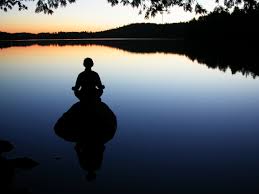



Philosophy draws from a wide range of philosophic writings including, Christianity, writings from Plato, eastern and western philosophies, ancient Indian Upanishads, Bgagavad Gita, Zen and many more areas.
Philosophy seeks to address questions we may have about ourselves. Who am I? What's the meaning of life. Where do I fit into the greater scheme of things. What's my purpose?
"I think therefore I am"- Rene Descartes
There is a seeking to know oneself. To be authentic in the world. We want to better ourselves.
So if wisdom is the key to philosophy, how is it applied and lived practically? A key question to ask myself in a given situation; what would a wise woman do here?
It is in the quest to expand my wisdom and live my life accordingly that I seek answers to these sort of questions.
What do I want? I wish to live my life more consciously and deliberately.
The question "what would a wise woman / person do here?" has become an underpinning philosophy in life. So far it is working extraordinarily well. It is applicable in all situations of life.
Next is to know myself intimately and be as authentic and real with myself and to others whom I come across in my life. To be more loving, to be more kind both to myself and others. To be more present, to be more mindful of the way I live and love. To live consciously.
What is the practical value in studying philosophy? For me it is about acquiring a practical and valuable set of skills and a way of being that I can apply in my life and create a greater awareness of myself and the way I operate in the world with myself and others.
So where to from here? The older I get the more I realise the importance of living a life of value not only for my sake but for those I come into contact with. I wish to live wisely.

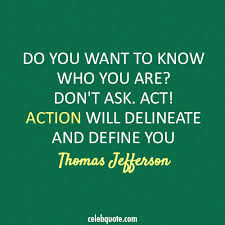
Shakespeare refers to it as "noble and most sovereign reason". Is that how you would describe it?
The power of reason can be misused as a way to justify doing something that we intuitively know is not right or a way of excusing selfish or petty behaviour.
We can be extraordinarily clever in dreaming up reasons to make something which is wrong-right. As an individual it is reasonable to ask myself- what is true or right for me? When I do this I am figuring out what is the best course of action or thought for me i.e. What would a wise person do here?
Without consideration of this question I can potentially put myself in a dangerous place of reasoning or rationalising what is good for me as an individual but not good for those around me. The obvious problem with this is that I don't consider the implications on those around me. What about my partner? What about my children? What about my work colleagues and so on.
Circle of reason
Imagine yourself at the very core of a circle, Imagine yourself as the proverbial stone being thrown into the millpond. It has ripple effects firstly on me, then continuing the ripples to my family, my friends, my colleagues, society, humanity, the world. At first we may consider the questions at the beginning level i.e. me or my family. The questions may not seem relevant at the greater level, but it is still worth asking yourself the question.
When starting to practise this line of reasoning, we begin to realise the greater impact or result at a greater level. When we begin to consider the impact or results beginning at the personal level, we see the potential for far reaching results and the realisation we live in a larger world.
Like the mill pond ripples, making a decision at the individual level benefits the family, families serve our societies, societies contribute positively to humanity and humanity would care for our whole world, which ultimately brings benefit to all.
The concept appears very simple but putting it into practise takes on a whole new ball game. We hold onto what is known or familiar to us, afraid to let go. On a daily basis we play different roles, sometimes changing at great speed. We may be the work colleague, the parent, the father, the sister, the brother, partner, the boss or any number of relationships.
So then we begin to wonder what is constant in all of this? This is the Self and is why Self knowledge is the most important of all knowledge. If we don't have this knowledge we may become confused and complexity is endless.
When we doubt ourselves, that doubt is reflected everywhere and in everything. On the other hand with Self knowledge, we can live in confidence, with clarity and courage and able to play our parts in the great play of life.
"All the world's a stage,
And all the men and women merely players;
They have their exits and their entrances,
And one man in his time plays many parts,"
William Shakespeare
We can walk confidently between the relevant spheres of life with fluidity and ease with no fear of losing ourselves. In order to become what we are, we must step out of what we are not.
So again coming back to the question of what is constant in all of this? Since we play many roles, we need to find out what is constant. What is constant??? Once we realise and have self knowledge of who we are, i.e I AM...... then our confidence in living our lives brings clarification.
A great Indian philosopher- Shankara was adamant when he taught that reason is to be used to free ourselves from any false limitations. He says that reason is the ability "to discern the transient from the eternal, the changing from the unchanging". We are not this transient role and we are not this changing feeling that overwhelms us.
Have you ever caught yourself being different around different people? Sort of like putting on a mask. We become the person we think that the other wants us to be, what masks, costumes, mannerisms do we adopt? Do we speak in the same way, or accents of speech? Do we use terminology that we think would impress the other?
Think about the roles you play from day to day and when in different scenarios. Are you being true to yourself? Are you being real?
Shakespeares character Polonious from his play Hamlet says:
"This above all: to thine own self be true,
And it must follow, as the night the day,
Thou canst not then be false to any man.
Farewell, my blessing season this in thee!"
Being real with yourself is to be true to yourself and others. If you are seeking to live a good and pure life then you cannot pretend to be making lifestyle changes that the world sees yet when you are alone or behind closed doors you still think, act and live in another manner unbecoming to goodness.
Philosophy seeks to address questions we may have about ourselves. Who am I? What's the meaning of life. Where do I fit into the greater scheme of things. What's my purpose?
"I think therefore I am"- Rene Descartes
There is a seeking to know oneself. To be authentic in the world. We want to better ourselves.
So if wisdom is the key to philosophy, how is it applied and lived practically? A key question to ask myself in a given situation; what would a wise woman do here?
It is in the quest to expand my wisdom and live my life accordingly that I seek answers to these sort of questions.
What do I want? I wish to live my life more consciously and deliberately.
The question "what would a wise woman / person do here?" has become an underpinning philosophy in life. So far it is working extraordinarily well. It is applicable in all situations of life.
Next is to know myself intimately and be as authentic and real with myself and to others whom I come across in my life. To be more loving, to be more kind both to myself and others. To be more present, to be more mindful of the way I live and love. To live consciously.
What is the practical value in studying philosophy? For me it is about acquiring a practical and valuable set of skills and a way of being that I can apply in my life and create a greater awareness of myself and the way I operate in the world with myself and others.
So where to from here? The older I get the more I realise the importance of living a life of value not only for my sake but for those I come into contact with. I wish to live wisely.

The next step in applying philosophy practically is to know myself - ask myself who am I?
I am......! I have various facets of who I am such as I am a mother, I am a friend, I am a volunteer, I am a supporter, I am a counsellor, I am a participant, I am an employee, I am a sibling, I am a companion. I am many things but these are states of being in specific circumstances. The bottom line is I AM! Great philosophers over the ages have asked the question; Who am I?- and it is certainly one of the most profound and far reaching questions humanity has asked itself.
How can the soul, which misunderstands itself, have a sure idea of other creatures?
Seneca
Shakespeare's quote from Hamlet says:
This above all: to thine own self be true,
And it must follow, as the night the day
Thou canst not be false to any man
If I am to live philosophy in a practical manner then I am required to do more than just listen to ideas. I need to dig deeper so to speak and apply these ideas to my being so they become fuller and more meaningful into my life. They need to be evidenced in the way I conduct my life. In order to do this I need to be more observant of the self.
"When something is heard with an open mind and then applied in practise, it becomes possible to see more clearly the truth or lack of truth in what is heard"-
Retrieved from: www.philosophy.school.nz
Acquiring insight provides a foundation of true understanding for me and I can then share with others who are open.
When I am open to others and I suspend internal judgements and labelling through the practice of being still, I am better able to find unity with my fellow man. When I put my discersive mind to the side to give my full attention to another I am far more available to them. It's being able to listen to another without rehearsing in my mind what I'm going to say next.
A daily practice I have is to find a quiet space (twice a day if possible) and sit in a comfortable position. It is a form of meditation.
1. I connect with myself starting with the sense of touch.....Plant my feet firmly on the ground. Feel the weight of my body on the chair. Feel the touch of my clothing on my skin, the air of my face.
2. Sensing taste and smell. What can I smell? What can I taste?
3.Be aware of sight (I choose to close my eyes and see internal shapes and colours) If you keep your eyes open don't label anything, just observe colours and shapes, nothing more. Just be aware.
4.Now be aware of sounds and what you hear. Listen for sounds closest to you within the room. Allow your listening/ hearing to extend further outside. Don't be bothered by sounds you may consider intrusive, just accept these for what they are- noise.
5.Now with your body completely relaxed stay in the present moment, be completely open and just be in the NOW. Stay with your awareness's neither assessing or judging anything just observe. Rest for a few minutes.
This exercise of "being still" is a great way to teach me to just be neither judging or rejecting just being in the NOW. No thoughts of the future or the past just NOW. It is teaching me how to be non judgemental and more observant.
States of consciousness or levels of awareness
- Higher consciousness- In this state I become at peace with myself, at unity with the world. I just am. My level of awareness is highly tuned. It is elevating my awareness beyond my normal thought processes where I can experience my true nature and potential.
- Fully awake- I am fully awake and fully aware. In this state I am feeling refreshed and energised.
- Waking sleep- I have experienced this state many times and is a common state for many of us. This is where I am on auto pilot and I do things mechanically without any awareness of having done something. A classic example recently for me was when I was driving to attend a weekly meeting, and I drove right past the venue and it wasn't till a couple of kilometres later I realised I wasn't even present to the fact I was going to a meeting. The practice of becoming more observant of the self helps overcome this.
- Dream-A self explanatory state. We sleep, we have dreams, maybe a nightmare or we have lovely dreams but we awake knowing it was just a dream.
- Deep sleep-For some going to sleep may be elusive because we are troubled and are allowing the troublesome thoughts to pervade our thinking. Or we may be working out a problem in our heads or a project or a work situation. Sleep is natural and is a time to let go of the thoughts in our head in order to rejuvenate and slip into deep sleep. In this state we do not dream our bodies and minds rest and we awake having knowledge of a good sleep.
Living Justly
Many of us wish to live justly i.e. we wish to live wisely and with justice. It is acknowledged that there is a strong correlation between wisdom and justice.
Plato 347 - 428 BC has many famous dialogues on justice.
Plato 347 - 428 BC has many famous dialogues on justice.
He said that when wisdom, or the opinion of the best as he calls it, is the guiding principle for the actions of either individuals or societies, that is a just situation. He went so far as to say that even in a case where someone sincerely seeks to follow what is wise and makes an error, that does not stop it being a just action.School of Philosophy.
Justice means living wisely or making the effort to do so. There are certain things that interrupt this and they are what Plato called the 6 tyrants of the soul. Such things as anger and fear tyrannise the soul.
Plato Law 864 says that we may have a passing anger, have pleasures and pain etc. and of themselves are not necessarily unjust in themselves. It becomes unjust when we allow these things to dominate our soul thus causing one to lose their own free will and volition. This may be from the individual, a society or a nation. Loss of freedom becomes an injustice. This will be evident in the form of actions and becomes a condition of the heart.
Six tyrannies of the soul
Plato named the following six tyrants as things that tyrannise the soul.
1.Anger
2.Fear
3.Jealousy
4.Desire
5.Pleasure
6.Pain
A wise person seeks to be free of the dominion of these tyrannies of the soul and live justly. A wise person ceases to be driven by these six tyrants and instead lives a more balanced and measured life thus being more free.
When we go about our daily life and we find ourselves being hooked into a situation that causes us to feel some of the above tyrants in our soul, we, with practice can learn to be more observing rather than being a participant. We may ask ourselves; "for what am I giving up my peace of mind?......." Observation and being present in the moment will help us maintain a far more peaceful way of being.
The Three- Fold Energy
In our daily lives we have all sorts of varying circumstances that occur. Each day may be different to another.The quality of these can be consistent when operating from a wise persons perspective.
In the previous section I discussed Plato's tyrannies of the soul. A wise person can recognise these and begin to live in a more balanced and measured way giving less domination of the tyrannies by recognising these and working appropriately when faced with them. Sometimes it is easier than others to be connected and present. Other times seem more difficult such as when we have something that is worrying us.
When we have a greater awareness of the inner being we can become more aware of the externals that can cause an imbalance of the soul.
There are three different levels of energies which operate throughout our daily lives and unless measured will cause that imbalance to arise within us. The three-fold model known as the "Guna" model comes from the Indian tradition called the Vedic system, from the text of the Bhagavad Gita. The word Guna comes from Sanskrit meaning force or energy. It also means it is part of a whole. The three fundamental energies from the Guna model are:
Broadly translated these mean;
1.Sattva- illuminates, sustains and nourishes, conscious, light, clarity, understanding, peace and stillness
2.Rajas-movement, creative force, change, power of locomotion, drive, growth and activity
3.Tamas- regulates, holds form, inertia, dissolution, discipline, brings to rest- extract from School of Philosophy
These are present most of the time but there is largely one energy more predominant than another at any given time. Sattva and Tamas are more prevalent at Dawn and Dusk. Tamas when the close of day occurs and things are beginning to quieten down. During the day when we go about our daily activities then Rajas is more present and we go about our day oscillating between Sattva and Tamas.
It is a necessity to be aware of the busyness of the day during our work and take time to be present and maintain a good balance of all these energies. In order to increase Sattva we need to use the exercise of stopping and pausing at the end of each activity and becoming aware of our five senses. Sort of like a full stop.
I like to take a deep breath, focus on the five senses briefly, then move on purposefully and mindfully to the next activity.
The Light of Reason
The power of reason- The wise man knows how to use the power of reason. It can be defined as the faculty of mind which is used to know what is true and right. Philosophy Part 1, School of philosophy
What is reason? A group of people were asked this question and the following thoughts were given:
- Balanced thinking
- The thought behind an action
- Reasonable (fair)
- Purpose
- Pure
- Royal
- Regal
- Gives explanation
Shakespeare refers to it as "noble and most sovereign reason". Is that how you would describe it?
The power of reason can be misused as a way to justify doing something that we intuitively know is not right or a way of excusing selfish or petty behaviour.
We can be extraordinarily clever in dreaming up reasons to make something which is wrong-right. As an individual it is reasonable to ask myself- what is true or right for me? When I do this I am figuring out what is the best course of action or thought for me i.e. What would a wise person do here?
Without consideration of this question I can potentially put myself in a dangerous place of reasoning or rationalising what is good for me as an individual but not good for those around me. The obvious problem with this is that I don't consider the implications on those around me. What about my partner? What about my children? What about my work colleagues and so on.
Circle of reason
Imagine yourself at the very core of a circle, Imagine yourself as the proverbial stone being thrown into the millpond. It has ripple effects firstly on me, then continuing the ripples to my family, my friends, my colleagues, society, humanity, the world. At first we may consider the questions at the beginning level i.e. me or my family. The questions may not seem relevant at the greater level, but it is still worth asking yourself the question.
When starting to practise this line of reasoning, we begin to realise the greater impact or result at a greater level. When we begin to consider the impact or results beginning at the personal level, we see the potential for far reaching results and the realisation we live in a larger world.
Like the mill pond ripples, making a decision at the individual level benefits the family, families serve our societies, societies contribute positively to humanity and humanity would care for our whole world, which ultimately brings benefit to all.
The concept appears very simple but putting it into practise takes on a whole new ball game. We hold onto what is known or familiar to us, afraid to let go. On a daily basis we play different roles, sometimes changing at great speed. We may be the work colleague, the parent, the father, the sister, the brother, partner, the boss or any number of relationships.
So then we begin to wonder what is constant in all of this? This is the Self and is why Self knowledge is the most important of all knowledge. If we don't have this knowledge we may become confused and complexity is endless.
When we doubt ourselves, that doubt is reflected everywhere and in everything. On the other hand with Self knowledge, we can live in confidence, with clarity and courage and able to play our parts in the great play of life.
"All the world's a stage,
And all the men and women merely players;
They have their exits and their entrances,
And one man in his time plays many parts,"
William Shakespeare
We can walk confidently between the relevant spheres of life with fluidity and ease with no fear of losing ourselves. In order to become what we are, we must step out of what we are not.
So again coming back to the question of what is constant in all of this? Since we play many roles, we need to find out what is constant. What is constant??? Once we realise and have self knowledge of who we are, i.e I AM...... then our confidence in living our lives brings clarification.
A great Indian philosopher- Shankara was adamant when he taught that reason is to be used to free ourselves from any false limitations. He says that reason is the ability "to discern the transient from the eternal, the changing from the unchanging". We are not this transient role and we are not this changing feeling that overwhelms us.
Have you ever caught yourself being different around different people? Sort of like putting on a mask. We become the person we think that the other wants us to be, what masks, costumes, mannerisms do we adopt? Do we speak in the same way, or accents of speech? Do we use terminology that we think would impress the other?
Think about the roles you play from day to day and when in different scenarios. Are you being true to yourself? Are you being real?
Shakespeares character Polonious from his play Hamlet says:
"This above all: to thine own self be true,
And it must follow, as the night the day,
Thou canst not then be false to any man.
Farewell, my blessing season this in thee!"
Being real with yourself is to be true to yourself and others. If you are seeking to live a good and pure life then you cannot pretend to be making lifestyle changes that the world sees yet when you are alone or behind closed doors you still think, act and live in another manner unbecoming to goodness.
I have known so called "Christian" families to be going to church regularly, yet behind closed doors the family are being subjected to violence and abuse. To all the world they appear good. Only they know things are not as they seem.
It means that in all areas of your life you live with practises that bear good fruit. Wrong living needs to be right living. For example; be happy and content in a simple life. Constant striving and ambition, too much work, taking on too much responsibility beyond yourself, makes for an anxious, worry filled and stressful life. Decide the sort of people you allow into your life. Those that fit with your philosophy on life. Simplify your life as much as you can.
Violence is non conducive to living in realness or truth to yourself or others. You have to be non aggressive, non abusive, non judgemental and non critical toward other people. Don't use name calling or put downs toward yourself, family or any other person. Your speech is indicative of the thoughts inside your head. A violent or abusive person can never know peace of mind. A peaceful person is kind, thoughtful to all including nature and animals. This person exhibits attributes such as love, joy, peace patience, kindness, gentleness and self control. They show compassion and a spirit of helpfulness, they show understanding and tolerance as much as practicable or possible.
Another way of being true to yourself is to honour yourself in a manner that takes care of your physical body. If my body is like a vessel that carries my essence, I am responsible to look after it. It's like having a car and driving it without ever doing any maintenance on it or doing the necessary work to keep it in tip top shape. That means eating well and exercising regularly as well as taking care of the spiritual dimension of your life.
Mindfulness- attending to the present moment.
What is mindfulness? The easiest way to define mindfulness is that it is basically a practise of giving full focused attention to what it is we are doing, knowing exactly where our attention is and choosing where to direct it. It is focussing on being present in that moment.
We have two dimensions of awareness of our life. We can recall the past and think about our lives then, and we dream or imagine the future and the times to come. Then we have the present moment, the NOW. When we are focussing on the present moment, we are being more observant and more in tune with situations of life. We are awake to the present needs.
Typically for many of us we operate on auto pilot. It is not any easy matter, to live moment by moment but it can be an on going state of consciousness the more it is practised.
We get caught up in the daily affairs of life being trapped at times by thoughts and daydreams thus obscuring our contact with our surrounds and ourselves. We fail to live mindfully and presently. Even doing such tasks as eating, showering, doing chores etc. can be opportunities to practice living mindfully. After each situation, tell yourself to stop, pause and savour each moment.
Many of us would imagine that day dreaming about pleasant things is an activity that would make us happy. A recent Harvard study, found that simply paying attention to what we are doing makes us happiest. Hassed. Dr Craig et al (2012) Mindfulness for Life.
When practising mindfulness I am focussing on living in the present. I am practising being in the now, the present moment. You are noticing yourself and how you are being right now. What is in your heart, what attributes are you focussing on giving. Is it love, is it kindness, is it charitable? If not what needs to change within you?
"You do not become good by trying to be good, but by finding the goodness that is already within you, and allowing that goodness to emerge." (Oneness With All Life)
| "The joy of being is the joy of being conscious." (Oneness With All Life) |
“The present moment is filled with joy and happiness. If you are attentive, you will see it.”
― Thich Nhat Hanh,
― Thich Nhat Hanh,
Chenrezig Tibetan Temple Sunshine Coast Hinterland, Queensland, Australia
We cannot be happy in the future or the past and all we have is now so why don't we make the most of focussing on the present moment. To always live in the past is destructive. "I should of done this or I should have done that" or "I wish I'd done....." are in fact phrases that doom us to live in a nebulous place. All we have is the present moment of NOW. Focussing on the positives with gratitude and thankfulness are key attitudes that reinforce our sense of wellbeing. If all else is falling around us and we look for the positives we will find them.
Two elements are necessary when we are being mindful:
1. It is something we are intentional about. We are deliberately and consciously doing something.
2. We are accepting something on face value rather than making a judgement about it.
To be mindful is of great benefit to our wellbeing.

"The more shared past there is in a relationship, the more present you need to be; otherwise, you will be forced to relive the past again and again." (Oneness With All Life)
Eckhart Tolle.


